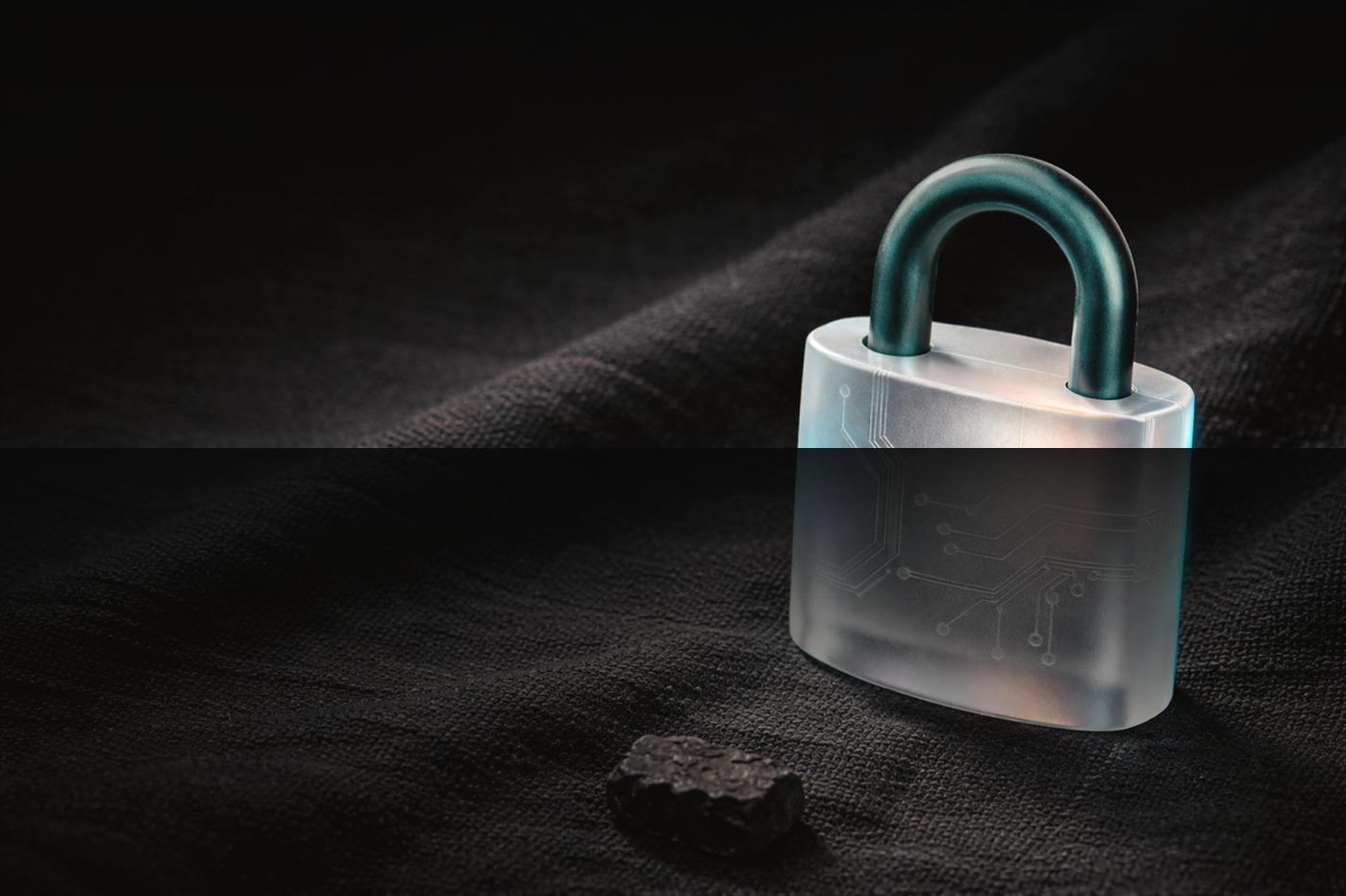
The Lock Icon Is Not Security
What the padlock actually guarantees — and what it doesn't
Picture the moment. You are at a screen — blue light on your face, a faint hum at the edge of hearing, fingertip hovering. Somewhere between your eyes and your prefrontal cortex, a decision has already been made. The icon registered. The body approved. You are typing.
What you did not witness: your browser negotiated Transport Layer Security (TLS) with a server. A handshake, invisible, completed in under a second — before you even finished reading the URL.
What the Lock Actually Means
That is the scope. TLS protects data between your device and the server. It says nothing about what happens once the data arrives — what is stored, who can access it, how it ages inside systems you will never see.
The lock reflects transport state. You felt systemic safety. That is the gap.
The Compression Problem
Your nervous system evolved to process a moving world in under two hundred milliseconds. Fast enough to dodge falling branches. Too fast for nuance. Symbols enter through the eyes, bypass deliberate reasoning, and land in the body as feeling. The lock is cold and silver and closed. Your ancestors learned that closed means protected. The association is older than language.
Interfaces collapse multi-layered systems into single symbols because they have to. No one wants to sit with cipher negotiation, certificate authority chains, perfect forward secrecy parameters, or session renegotiation on every page load. We draw a lock. We hand it to a mammalian nervous system and ask it to feel safe.
The protocol guarantees encryption in transit. The icon implies safety in total. Those are not equivalent claims — but one of them lands in the body, and the other lives only in the documentation.
“The interface reflects cryptographic transport success. The user perceives existential protection.”
The State Machine Beneath the Symbol
Underneath the icon is not safety. It is a sequence of state transitions:
- No connection
- TCP handshake
- Certificate validation
- Key exchange
- Encrypted session
If certificate validation fails, the lock disappears. If the company later leaks your database, the lock remains.
That mismatch is architectural. Not accidental, not malicious — structural. The interface was never designed to represent the whole system. It was designed to represent one transaction. We extended its meaning without authorization.
Where Abstraction Breaks Trust
Abstraction is not deception. It is how complex systems become usable. But abstraction fails when the story implies more than the system guarantees.
Consider phrases like end-to-end encrypted, secure platform, verified, private. Each has a precise technical definition. Each is interpreted by users as absolute. The drift between technical guarantee and human interpretation is where trust erodes — not because the cryptography failed, but because expectation exceeded scope.
Security Is Scoped, Not Absolute
Encryption in transit does not protect against compromised endpoints, insider access, misconfigured storage, legal data requests, or social engineering. No protocol eliminates risk. It constrains specific threat models.
The lock icon does not represent security. It represents negotiated encryption under defined assumptions. Precision matters — especially when building systems that claim to protect people.
The Discipline of Honest Abstraction
If you design digital systems, your real job is not to eliminate failure. It is to represent system state faithfully without overwhelming cognition. That requires a specific discipline: match symbols to their actual guarantees. Clarify scope at every interface boundary. Avoid absolute language when the system offers conditional protection. Design failure states with the same intentionality you bring to success states, because users learn your system’s character most clearly when something goes wrong. Reduce ambiguity under error — not just under normal operation.
Trust is preserved not by perfection, but by accuracy.
The Cognitive Parallel
This is not a problem unique to software. It is a feature of all interfaces — including the one you have been living inside your entire life.
Right now, your eyes are translating photons into narrative. Your skin is reading air pressure as a stable surface called a chair. Your inner ear is running continuous gyroscopic calibration that you will never consciously access. Somewhere in your brainstem, threat-detection routines are sampling the environment every few hundred milliseconds, returning results you receive as mood rather than data.
You do not experience quantum fields. You experience solidity. Your brain compresses probabilistic physical processes into stable, usable fictions — and the compression is so seamless you mistake it for reality. Consciousness is an interface. Biology is a state machine. The interface feels coherent. The substrate is granular and conditional.
Software follows the same pattern. We are not building exceptions to a rule. We are building new instances of the oldest one — and we keep making the same mistake, confusing the map for the territory, the lock for the vault.
The Core Thesis
The lock icon is not malicious. It is a polite simplification of a narrow truth. But simplifications shape belief. And belief shapes trust.
If the abstraction implies total safety while the system guarantees partial protection, you have built an expectation gap. Design lives in that gap. And if you care about digital dignity, you close it carefully — not by overwhelming users with machinery, but by ensuring your abstractions never promise more than your systems can defend.
That is the difference between aesthetic security and structural security.